

Quick answer
Low Isles sits roughly 15 kilometres offshore in sheltered lagoon water, making it the calmer, shorter crossing for beginners, children and anyone prone to seasickness; the Outer Barrier Reef lies about 60 kilometres out with clearer water and larger coral structures. Island entry is free at 0 AUD — access is by commercial boat tour only, with the calmest conditions in the 07:00–16:00 window.
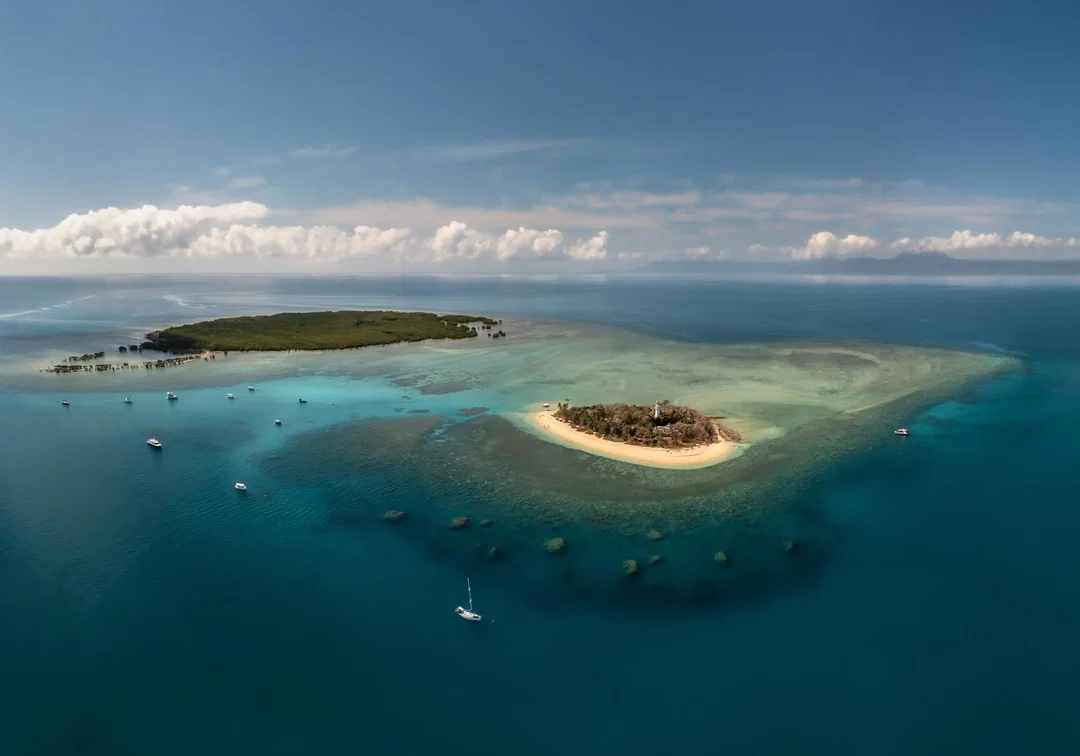
Low Isles is not one island but two: a four-hectare vegetated coral cay crowned by an 1878 lighthouse, and Woody Island, a mangrove-fringed reef flat that is closed to visitors. The pairing explains most of what follows. Mangroves stabilise sediment, seagrass meadows carpet the shallows, and green sea turtles graze within metres of the beach. That is a different ecosystem from the one found at Agincourt Reef, and it is the crux of any honest low isles vs outer reef comparison. The practical difference is exposure. Low Isles sits inside the lagoon, shielded by distance from the continental shelf, so swells stay modest and snorkellers can enter straight from the sand without a pontoon or a guided drop. Visibility runs lower — suspended sediment from the Daintree catchment is the trade-off for that shelter — but the shallow reef flat rewards patience with giant clams, batfish, epaulette sharks and around 150 recorded coral species. The Outer Barrier Reef ribbon reefs, by contrast, drop into deep blue water along the shelf edge. Coral bommies rise several metres, visibility improves markedly, and pelagic species appear. The crossing is longer and rougher, and the swim is unanchored from any beach. Choosing between the two is really a question about the weakest swimmer in the group. Families with young children, nervous snorkellers, and anyone who has ever regretted a boat ride tend to be better served by the cay. Confident swimmers chasing scale, wall structure and clarity will find the outer ribbon reefs closer to what they pictured. Some Port Douglas reef tours split the difference across two days rather than forcing a single verdict. Weather decides more than preference does. South-easterly trade winds strengthen through the middle of the year and hit the outer reef hardest, while the lagoon stays workable in conditions that make the shelf edge uncomfortable. Marine stinger season, running roughly November to May, applies to both sites and means a full-length suit either way. Anyone still weighing a low isles vs outer reef decision should check the forecast before committing, then use the booking pages to compare departures. The Great Barrier Reef Marine Park Authority publishes current reef health and site guidance at gbrmpa.gov.au.
“The choice is rarely about which reef is better — it is about the weakest swimmer in the group.”
Low Isles vs Outer Reef: A Snorkeller’s Comparison
Choosing between Low Isles and the Outer Barrier Reef depends on your preference for sheltered lagoon conditions versus open-ocean biodiversity. Both destinations offer distinct experiences within the Great Barrier Reef Marine Park.
|
Top pick Low Isles Sheltered Lagoon |
Outer Barrier Reef Open Ocean | |
|---|---|---|
| Travel time from Port Douglas | 15–30 minutes | 60–90 minutes |
| Snorkelling environment | Coral cay and seagrass meadow | Continuous reef edge and bommies |
| Marine life variety | High turtle population and shallow reef fish | Greater coral diversity and pelagic species |
| Water depth and calm | Shallow and protected | Deeper with higher current exposure |
| Ideal visitor profile | Families, beginners, and sun-seekers | Experienced snorkellers and marine biology enthusiasts |
Verdict: Select Low Isles for a calm, shallow environment ideal for relaxation, or choose the Outer Barrier Reef for deeper waters and a broader spectrum of coral and marine life.
Optimal Timing for Low Isles vs Outer Reef Visits
The best arrival window is 07:00–16:00, as early morning provides calmer water, higher visibility, and fewer crowds before peak midday heat. Selecting your visit based on seasonal weather patterns ensures more stable conditions for snorkelling both the Low Isles and Outer Reef.
Weekday mornings
Minimal—
Reduced vessel traffic provides clearer water and quieter conditions at the mooring site.
May to September
ModerateDry season with 20°C–26°C air temps.
Lower humidity and southeast trade winds often provide stable conditions for Outer Reef trips.
October to November
LowPre-summer with 24°C–30°C air temps.
These months offer a balance of warm water temperatures and high water clarity before the wet season begins.
Verdict: For the best experience, aim for weekday mornings during the stable conditions of May or October.
Getting to Low Isles vs Outer Reef
Low Isles is located within the Great Barrier Reef Marine Park, approximately 15 kilometres off the coast of Port Douglas. Access to both Low Isles and the Outer Barrier Reef is exclusively provided via commercial boat tours departing from Port Douglas.
Commercial tour vessel from Port Douglas Marina to Low Isles
Commercial tour vessel from Port Douglas Marina to Outer Reef
Operating Hours for Low Isles vs Outer Reef Tours
Low Isles remains accessible seven days a week, with tour operators scheduling departures to align with these consistent operating hours. Unlike Outer Reef tours which often require longer transit times, Low Isles departures are frequent due to the island's closer proximity to the mainland.
| Monday | 07:00–17:00 | |
|---|---|---|
| Tuesday | 07:00–17:00 | |
| Wednesday | 07:00–17:00 | |
| Thursday | 07:00–17:00 | |
| Friday | 07:00–17:00 | |
| Saturday | 07:00–17:00 | |
| Sunday | 07:00–17:00 |
Entrance Fees and Pricing for Low Isles vs Outer Reef
Access to the Low Isles site is free of charge, as it is a protected area within the Great Barrier Reef Marine Park. Costs for visitors are associated with commercial boat tour transfers rather than entry fees.
You pay 0 AUD to enter the island itself, with total costs depending solely on the commercial tour operator selected for transport.
Preparation Checklist for Low Isles vs Outer Reef
Both trips depart from Port Douglas by licensed vessel, so preparation differs mainly in sea conditions, time on water, and how much gear you bring yourself.
-
Book your tour weeks ahead — Low Isles and outer reef vessels have limited daily capacity, especially in peak season.
-
Confirm what gear the operator supplies — Most include mask, snorkel, fins and stinger suit, but wetsuit and prescription mask availability varies.
-
Declare medical conditions when booking — Asthma, heart conditions and recent surgery affect snorkelling clearance and may require a doctor's note.
-
Pack a stinger suit for November–May — Marine stingers are present on both inner and outer reef during these months.
-
Take motion sickness tablets before boarding — The outer reef crossing is roughly 90 minutes in open water; Low Isles is shorter and more sheltered.
-
Bring reef-safe sunscreen and a rash vest — Shade is limited on both sites and oxybenzone-free products protect coral.
-
Aim to arrive between 07:00 and 16:00 — Earlier departures give calmer water, better visibility and fewer boats on the anchorage.
-
Carry photo ID and your booking reference — Operators check passenger manifests against ID before departure under marine park permits.
Check availability
Common questions regarding low isles vs outer reef
Everything you need to know about low isles vs outer reef